
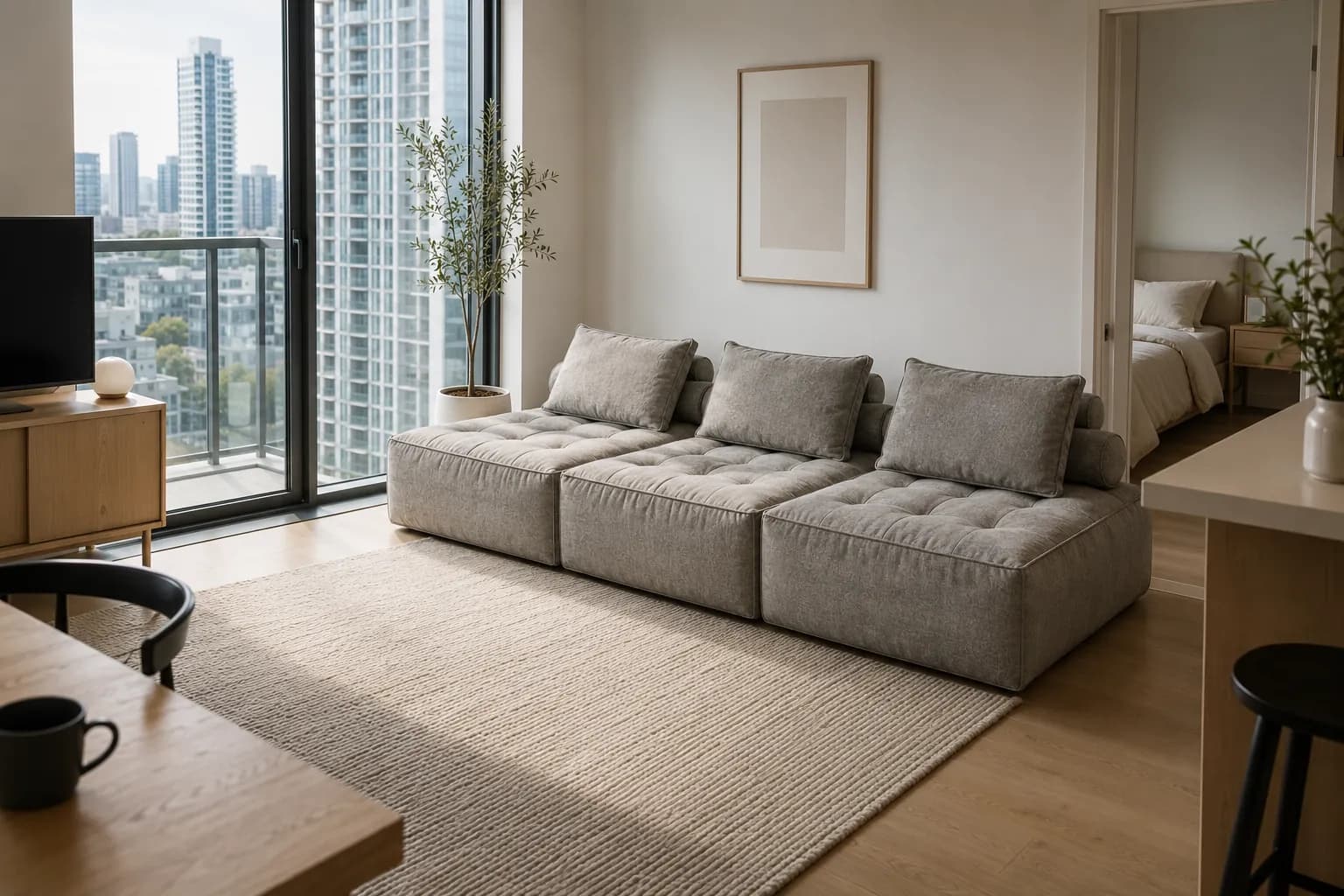
A small apartment makes you a better shopper. When every square foot counts, you can't fall for a couch just because it looks good in a showroom the size of a basketball court. So if you're hunting for the best sofa for a small apartment in Canada, the honest version of the question is really three questions stacked on top of each other:
Will it get through my door? Will it fit my room without eating it? And will it still be comfortable enough to actually live on?
Get all three right and you've found your sofa. Get one wrong and you've got an expensive mistake that's hard to return. Here's how to think it through — and why the way a sofa is delivered matters as much as how it looks.
Start with the part everyone forgets: getting it inside
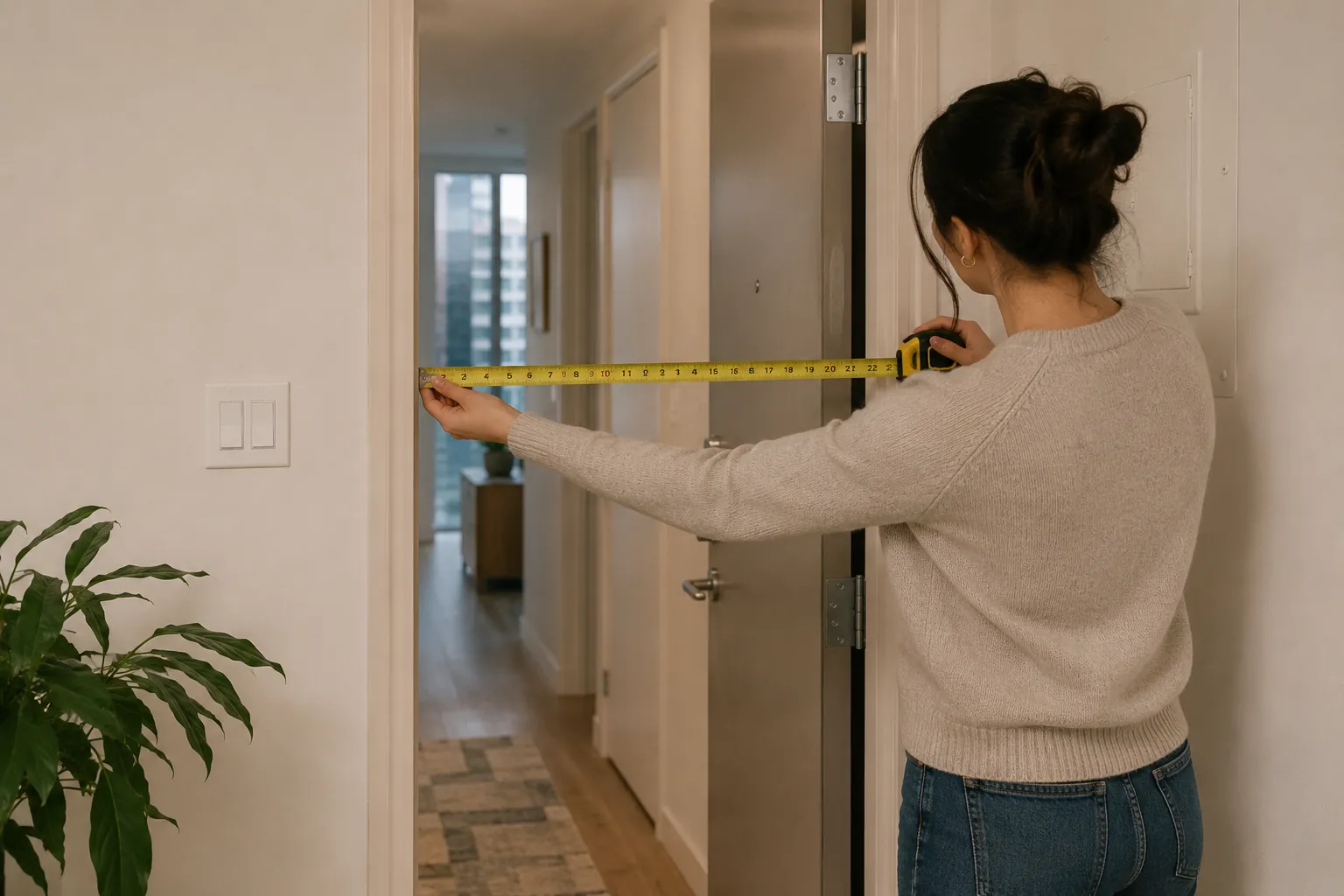
Most sofa guides start with style. In a small Canadian apartment — a downtown condo, a walk-up, an older building with a tight stairwell — you should start with logistics, because this is where the real heartbreak happens. A sofa that won‘t fit through the door isn’t a small problem; it‘s a returned sofa, a restocking fee, and another week on a folding chair.
Before you fall in love with anything, measure:
The narrowest doorway the sofa has to pass (and remember doors can be unscrewed from hinges to gain an inch or two).
The tightest turn — the landing at the top of the stairs, the corner where the hallway meets your unit.
The elevator, if you have one: both the door opening and the diagonal depth inside.
Then compare against the sofa's dimensions. With a traditional pre-assembled couch, this is a genuine gamble — a three-seater is roughly the size of a small car and doesn't bend. This single constraint is the strongest argument for a different category entirely: the sofa-in-a-box.
Why a sofa-in-a-box is built for small spaces
A sofa-in-a-box is a real, full-size sofa that ships compressed and vacuum-packed in a compact carton, then expands to its full shape at home. Because it arrives as a small box rather than one rigid frame, the "will it fit through the door" question mostly disappears:
It fits through tight doorways, hallways and standard elevators.
It's light enough to carry up walk-up stairs yourself — no delivery crew, no scheduling.
It sets up with no tools and no hardware — you unpack the modules, let the foam regain its shape, and connect the pieces.
For small-space living in Canada, that's not a gimmick — it's the whole point. You get full-size comfort without the moving-day logistics that make oversized furniture a nightmare in apartments.
Now fit the room: sizing and proportion
Once you know it can get in, make sure it doesn't swallow the room once it's there. A few rules that hold up in tight spaces:
Leave breathing room. Aim to keep roughly 45–60 cm of walking clearance around the main path through the room. A slightly smaller sofa with space to move around it feels bigger than a huge one jammed wall-to-wall.
Watch the depth, not just the length. Deep "sink-in" sofas are gorgeous but eat floor space fast. In a studio, a medium-depth seat often works harder.
Go low to lift the ceiling. Low-profile and floor-style sofas keep sight lines open, which makes a small room read as taller and airier.
Choose legs or no legs deliberately. Visible legs let light pass underneath and feel lighter; a solid floor sofa feels cozier and more grounded. Both work — just pick on purpose.
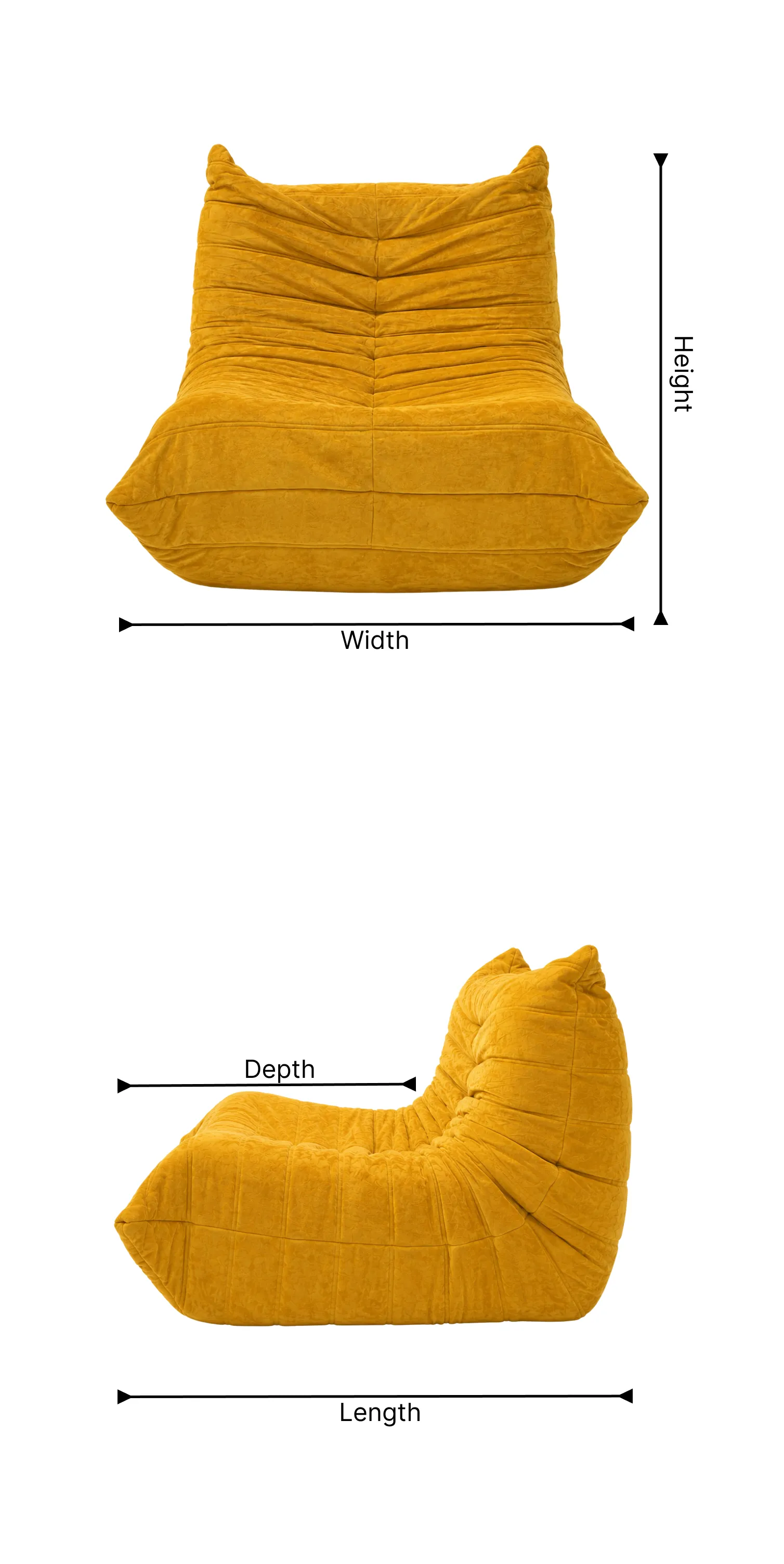
This is also where modular wins. A modular sofa is made of separate pieces you can rearrange, so the same sofa can be an L-shape in one apartment and a straight three-seater in the next. When your space is small and might change, that flexibility is worth more than a fixed shape you have to design the whole room around. The Caterpillar modular floor sofa leans into this with deep, low-profile seating that keeps sight lines open, while the Dune modular sofa gives you sectional flexibility you can reconfigure as your layout changes.
If your "small apartment" is really a studio or a reading nook needs filling, don't overlook a single accent piece — the Nesté chenille accent chair is the easiest of all to carry in and tuck into a corner.
Don't trade away comfort to save space
Here's the trap: in the rush to go small, people buy a sofa that's compact and uncomfortable — thin foam, a shallow seat, a back you can't actually lean into. A small apartment is where you spend the most concentrated time on your couch, so comfort matters more, not less.
The honest rule is that comfort comes from the foam and the design, not from the size or the way it ships. A good compressed sofa, once it expands to full size, feels exactly like a traditionally delivered one. Look for high-resilience, certified foam rather than a vague "cushioned" promise. Which leads to the last filter.
Buy on materials, not just looks
A small space is a long-term commitment to a single sofa — you don't have room for a second one — so it's worth checking what it's actually made of. The sofas in our range are built with CertiPUR-US certified foam and tested to OEKO-Tex Standard 100, E1 low-emission and EU REACH standards. That means low-VOC materials that hold their shape over years and are safe for homes with kids and pets — which matters in a small apartment where you're never far from your furniture.
Certifications like these are also a reliable way to tell a quality boxed sofa from a corner-cutting import that just happens to ship in a box.
A quick checklist before you buy
Measured the narrowest doorway, tightest turn, and elevator?
Confirmed the sofa fits the room with walking clearance left over?
Chose a depth and height that suit a small space (medium-depth, lower profile)?
Picked a modular shape you can rearrange if your layout changes?
Checked the foam and certifications, not just the photos?
Confirmed how it's delivered — and whether you can carry it in yourself?
Tick all six and you've genuinely found the best sofa for your small apartment — not just a sofa that looked good online.
Where to start
Browse the full Sofa-in-a-Box collection — every piece is built for small-space delivery.
The Caterpillar modular floor sofa — deep, low-profile seating that keeps a small room feeling open.
The Dune chenille modular sofa — sectional flexibility you can reconfigure as your space changes.
Frequently asked questions
What's the best type of sofa for a small apartment in Canada?
A compact, modular sofa-in-a-box. Because it ships compressed in a box, it fits through tight doorways and up stairs, sets up without tools, and you can rearrange the modules to suit a small or changing layout — all without giving up full-size comfort.
Will a sofa-in-a-box fit through narrow doorways and up stairs?
That's the whole point. Because it ships compressed in a compact box, it fits through tight doorways, hallways and standard elevators, and is easy to carry up walk-up stairs — no oversized frame to wrestle around corners.
Is a compressed sofa as comfortable as a regular one?
Yes. Once it expands to full size you get the same deep, supportive comfort as a traditional sofa — compression only changes how it ships, not how it feels.
How do I measure to make sure a sofa will fit?
Measure the narrowest doorway, the tightest turn or landing on the way in, and your elevator if you have one. A boxed sofa makes this far easier, since it arrives as a compact carton rather than one rigid frame.